
The fastest way to answer this: if you need serious control over a complex bite, traditional metal braces are usually your strongest bet. If you want a straighter smile with less show, ceramic braces or clear aligners deserve a closer look. At Black Diamond Orthodontics in Timnath, CO, Dr. Mark Greenburg and our team walk patients through all three options based on their bite, their schedule, and their personal style, so the choice fits the life you are actually living.
Picking a teeth-straightening option can feel like standing at the top of a run you have never skied before. You know where you want to end up, a confident, healthy smile, but the path down looks different depending on which line you choose. This guide breaks down braces vs. clear aligners and ceramic braces in plain terms, so you walk into your consultation with real questions instead of guesswork.
This Article Will Address
- What your main options are for straightening teeth
- How braces and clear aligners actually work differently
- Whether metal braces or clear aligners fit your case better
- How discreet ceramic braces really are
- How an orthodontist decides on the right plan for you
What Are Your Best Options for Straightening Teeth?
Most patients start with the same three choices: traditional metal braces, ceramic (specialty) braces, or clear aligners. Each one moves teeth using a different method, and each comes with its own tradeoffs in appearance, cost, and daily upkeep.
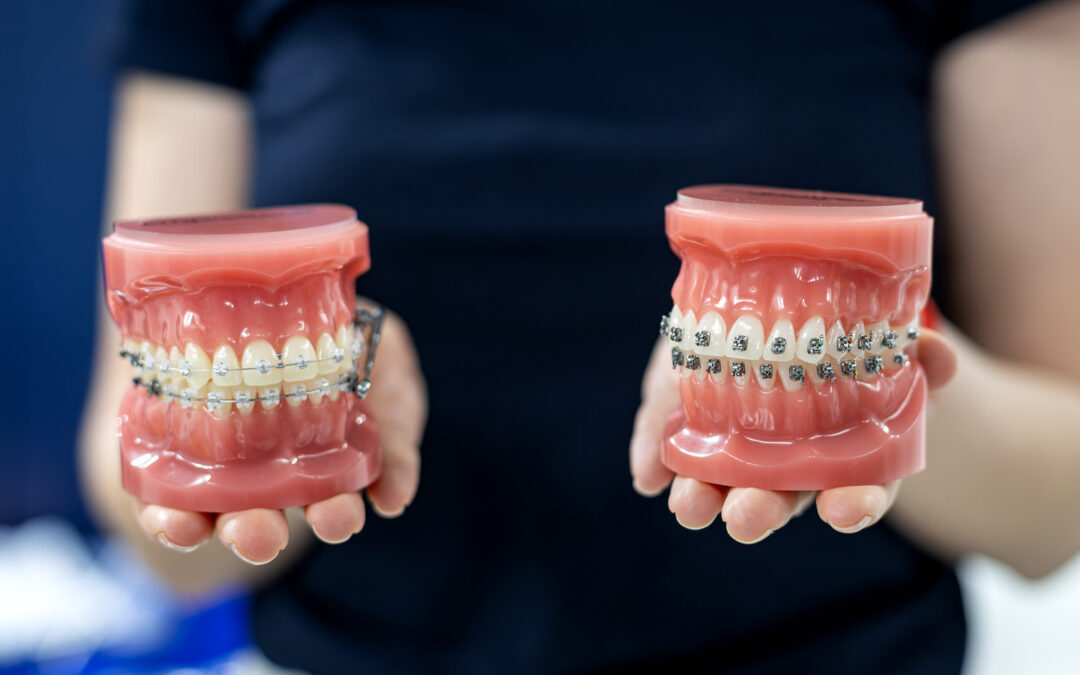
Traditional metal braces use brackets and wires for steady, predictable movement, even in complex cases.
Ceramic braces work the same way but use tooth colored brackets that blend into your smile.
Clear aligners use a series of removable trays that gradually shift your teeth into place.
Our orthodontic services cover all three options in Timnath, and every plan starts with a conversation about your goals, not a one-size-fits-all recommendation.
Cost and timeline vary by option too. Metal braces are typically the most budget-friendly route, ceramic braces run a bit higher because of the specialty material, and clear aligners often land in a similar range depending on how many trays your case requires. Treatment length usually falls somewhere between six months and two years for any of the three, depending on how much movement your smile needs.
What Is the Difference Between Braces and Clear Aligners?
The biggest difference comes down to how much control you have over the appliance itself. Braces are fixed to your teeth for the length of treatment, applying constant, steady pressure that an orthodontist adjusts every few weeks. Clear aligners are removable trays you swap out every one to two weeks, and they only work if you actually wear them, typically 20 to 22 hours a day.
That difference shapes almost everything else. With braces, there is no discipline required since they are always on, but you will need to avoid sticky, hard, or chewy foods and spend extra time brushing and flossing around brackets and wires. With aligners, you take them out to eat and brush like normal, but forgetting to put them back in slows your progress down the mountain instead of speeding it up.
A quick side by side helps some patients decide faster:
- Braces stay on your teeth around the clock and need adjustment visits every four to eight weeks.
- Clear aligners come off for meals and photos, but only work if you keep them in nearly all day.
- Both options finish with a retainer phase to help your new smile stay put.
Are Metal Braces or Clear Aligners the Better Choice for You?
Neither option wins across the board. Metal braces tend to be the better call for complex bite corrections, severe crowding, or cases that need precise rotational movement, since the fixed brackets and wires give an orthodontist tighter control over every tooth. Clear aligners tend to shine for mild to moderate spacing or crowding, especially for patients who want a nearly invisible option or who are not thrilled about wires and brackets showing up in every photo.
Lifestyle matters just as much as the case itself. Active families, musicians, and anyone who plays contact sports often do well with braces since there is nothing to lose or forget. Patients with packed schedules, frequent client meetings, or a strong preference for a low profile treatment often lean toward aligners instead. Dr. Mark reviews your bite, your goals, and your daily routine before recommending either path.
Case complexity is often the deciding factor. A significant overbite, rotated teeth, or a bite that needs real jaw level correction usually calls for the steady, adjustable force of braces. Simple crowding or a gap between the front teeth, on the other hand, is often a great match for clear aligners, especially for teens and adults who want their treatment to stay under the radar at school or work.
Can Ceramic Braces Straighten Your Smile Discreetly?
Yes, ceramic braces are built specifically for patients who want the predictability of braces without the same visibility. They use the same brackets and wires system as traditional metal braces, just in a tooth colored material that blends into your natural smile instead of standing out.
Ceramic braces work well for teens and adults who want a lower profile look but still need the structured, always on support that only fixed braces provide. Treatment time runs similar to metal braces, and results are just as reliable. The main tradeoff is that the elastic ties can pick up some staining over time from foods like coffee, wine, or curry, though regular replacement at adjustment visits keeps that in check.
Ceramic braces tend to be a strong fit if you:
- Want the control of fixed braces without the full visibility of metal
- Work in a client-facing role or attend a school where a discreet look matters
- Are comfortable making slightly more careful food choices to protect the ceramic brackets
How Does an Orthodontist Decide on the Right Treatment?
An orthodontist starts with a full diagnostic picture, not a guess. At Black Diamond Orthodontics, that means digital scans, a look at your bite and jaw alignment, and an honest conversation about your goals and daily habits, all before any treatment plan gets mapped out.
Dr. Mark Greenburg uses that information, along with in-house 3D printing and digital planning tools, to design a course that fits your specific case instead of applying the same fix to every patient. Some cases genuinely need the control of fixed braces to correct a bite properly. Others are a great match for the flexibility of aligners. The right answer is the one built around your mouth, not a trend.
A first visit with Dr. Mark typically includes:
- Digital intraoral scans instead of messy impression material
- A review of your bite, jaw alignment, and any early treatment needs
- A conversation about your schedule, budget, and personal preferences
- A custom treatment plan built around your specific goals
Book Your Free Consultation in Timnath, CO Today
Whether you are leaning toward classic metal braces, curious about ceramic braces, or ready to talk clear aligners, the best next move is a real conversation with someone who has mapped this trail before. Black Diamond Orthodontics is open and welcoming new patients and families throughout Timnath and Northern Colorado, and we would love to help you plan your route to a smile you are proud to share.
Call 970-632-9955 or schedule your consultation online to get your personalized plan started, or browse every teeth-straightening option we offer to see the full picture before you come in. Whatever direction you lean toward, Dr. Mark and our team are ready to guide you down every step of the run.
Sources
Aligners vs. Braces: A Comparison (American Association of Orthodontists)

Dr. Mark Greenburg
Dr. Mark Greenburg is the orthodontist behind Black Diamond Orthodontics in Timnath, CO. He earned his DDS from the University of Colorado School of Dental Medicine and his orthodontic certificate and MS in Oral and Craniofacial Sciences from the University of Missouri-Kansas City. Dr. Mark and his team are passionate about building lasting relationships with patients and creating a warm, upbeat experience at every visit.